Thermoforming
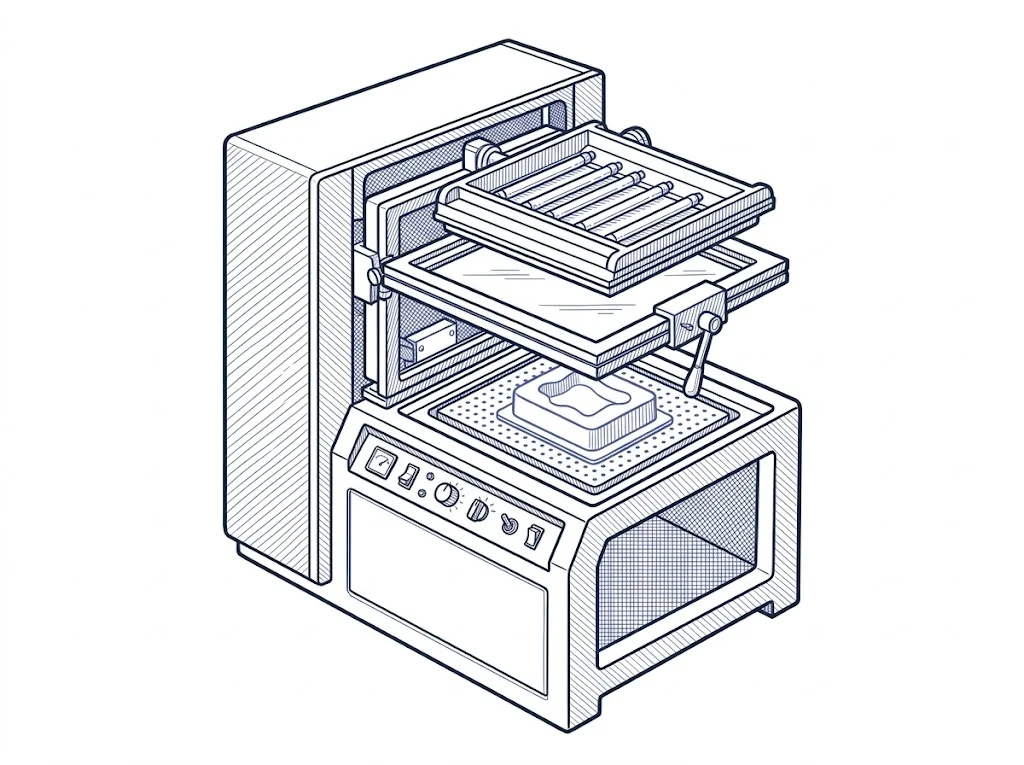
Thermoforming is the process that transforms sheets of thermoplastic material into three-dimensional shells, trays, components and packaging by exploiting the plastic behaviour of polymers above their glass transition temperature. The production cycle is straightforward: the sheet is heated uniformly in an oven or under infrared lamps until it reaches a malleable state, then draped over a mould and forced to conform precisely to its geometry through vacuum (vacuum forming) or compressed-air pressure (pressure forming), before cooling and stiffening in the impressed shape.
The most commonly processed materials are ABS, PETG, HIPS, polycarbonate and HDPE in thicknesses from 0.5 to 8 mm. The key advantage over cold injection moulding is mould cost — moulds can be made from wood, resin or aluminium — making the technology accessible for prototypes and short runs. In the maker context, desktop thermoforming machines enable the replication of components, masks, tool cases and custom faceplates, with modest investment and short setup times.
Machines for this process
No sheets published here yet.
We're verifying the first machines for this process. In the meantime you can browse the whole catalog →