Forming
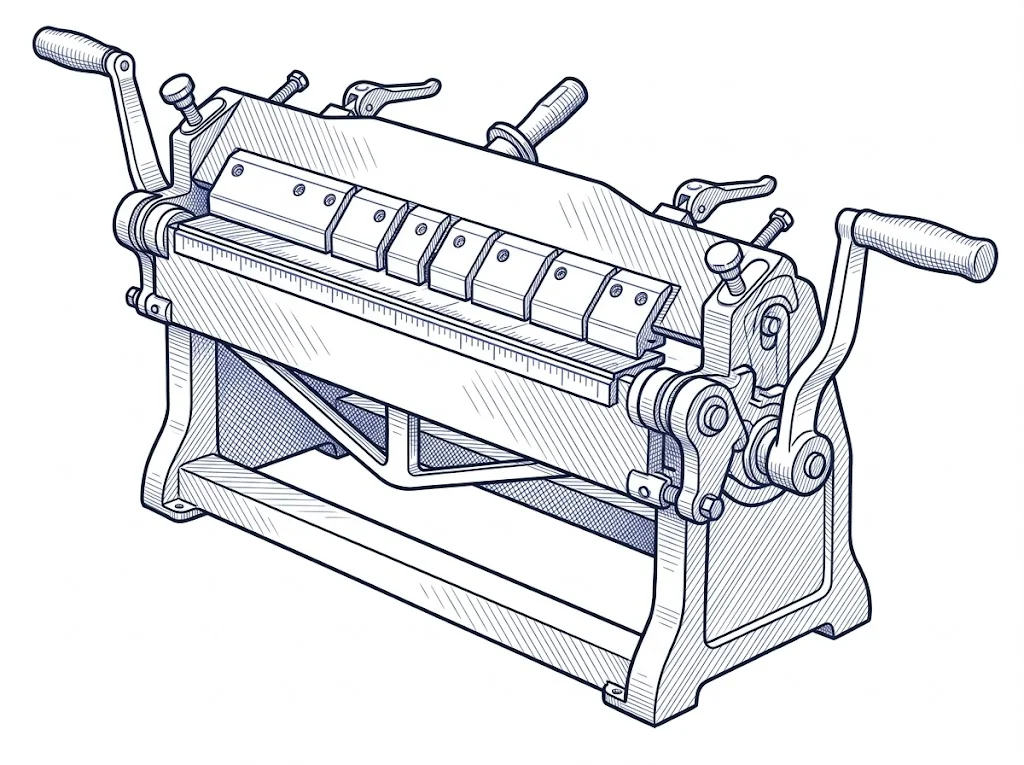
Forming processes are distinguished by a fundamental principle: altering the geometry of a material by exploiting its natural plasticity, without any addition or removal of mass. This approach is particularly valued in industry because it keeps the structural continuity of the material's fibres intact, often improving its mechanical properties. In the sheet-metal sector, deep drawing and stamping play a leading role: through the immense force of presses and dies, flat sheets of metal are stretched and forged to take on complex, concave three-dimensional geometries, from automotive panels to appliance casings. In parallel, for the production of the semi-finished products themselves, rolling mills use enormous opposing rotating cylinders to compress and thin the metal hot or cold, producing continuous sheets or structural profiles with strictly calibrated thicknesses. For more localized geometric modifications, bending is used instead, an operation entrusted to machines such as press brakes, which impress sharp angles, curves and precise edges along defined axes of the part. Finally, moving from the world of metals to that of polymers, thermoforming offers an ingenious solution for creating shells and packaging: a plastic sheet is heated until it reaches a malleable state, and then made to adhere perfectly to a three-dimensional mould through the application of vacuum or air pressure. As a whole, these technologies make it possible to shape matter while guaranteeing very high production volumes and an excellent cost-effectiveness ratio.
Machines for this process
No sheets published here yet.
We're verifying the first machines for this process. In the meantime you can browse the whole catalog →