Plasma cutting
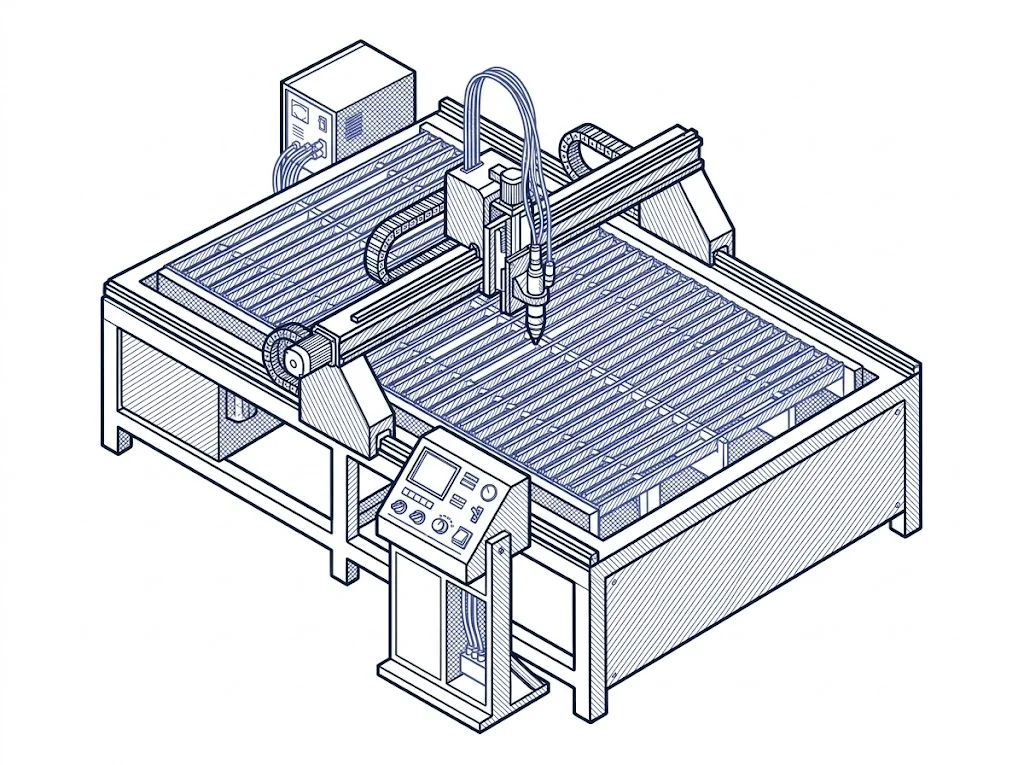
Plasma cutting exploits a jet of ionized gas at extremely high temperature — plasma — to melt and expel metal along the cut path. The principle is electrical: a pilot arc ionizes the cutting gas (compressed air, nitrogen, oxygen or noble mixtures) that passes through a constricted nozzle, reaching temperatures between 20,000 and 50,000 K, sufficient to melt any conductive metal. The high velocity of the jet expels the molten material, creating a clean cut.
The technology is particularly suited to conductive metal sheets — carbon steel, stainless steel, aluminium, copper, brass — in thicknesses from 0.5 mm up to 80 mm and beyond for professional systems. Compared with CO₂ laser cutting on metals, plasma offers higher cutting speeds on thick materials and a significantly lower machine cost; cut quality (bevel, HAZ) is generally lower than high-end fibre lasers, but sufficient for mechanical structures, frames, panels and non-precision components. In the maker and workshop context, desktop CNC plasma machines and gantry-style systems represent an accessible route to sheet-metal cutting outside the laser budget.
Machines for this process
No sheets published here yet.
We're verifying the first machines for this process. In the meantime you can browse the whole catalog →