Turning (lathe)
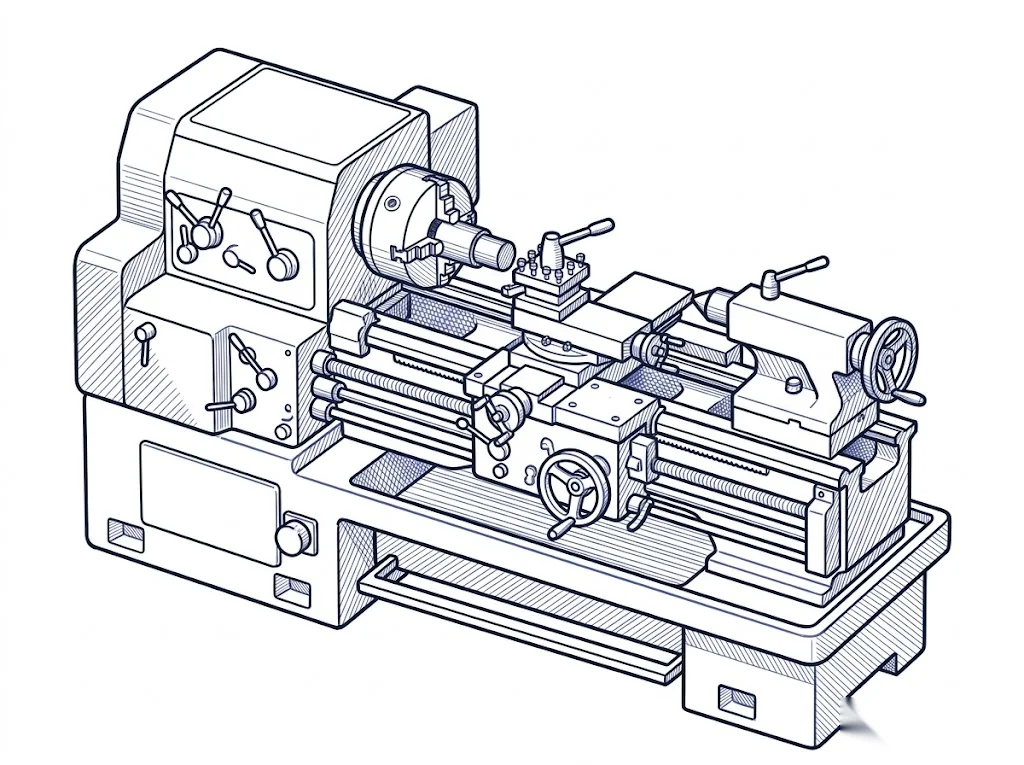
Turning is the subtractive technique in which the workpiece rotates around its own axis while a fixed cutting tool—or one guided along CNC-programmed paths—removes material to generate surfaces of revolution: cylinders, cones, spheres, threads and bearing seats. The lathe, available in manual gap-bed and CNC versions, is arguably the oldest and most widespread machine tool in the world; its fundamental logic has remained unchanged for centuries, but numerical integration has brought repeatability and geometric complexity that were once impossible. In the maker space, turning covers two distinct worlds: the wood lathe, a typical tool in creative workshops for producing bowls, handles and turned objects, and the metal lathe, indispensable for manufacturing shafts, bushings, adapters and precision mechanical components. Both share the same basic principle—workpiece rotation plus linear tool feed—but differ radically in structural rigidity, cutting speeds and achievable tolerances.
Machines for this process
No sheets published here yet.
We're verifying the first machines for this process. In the meantime you can browse the whole catalog →