Sublimation printing
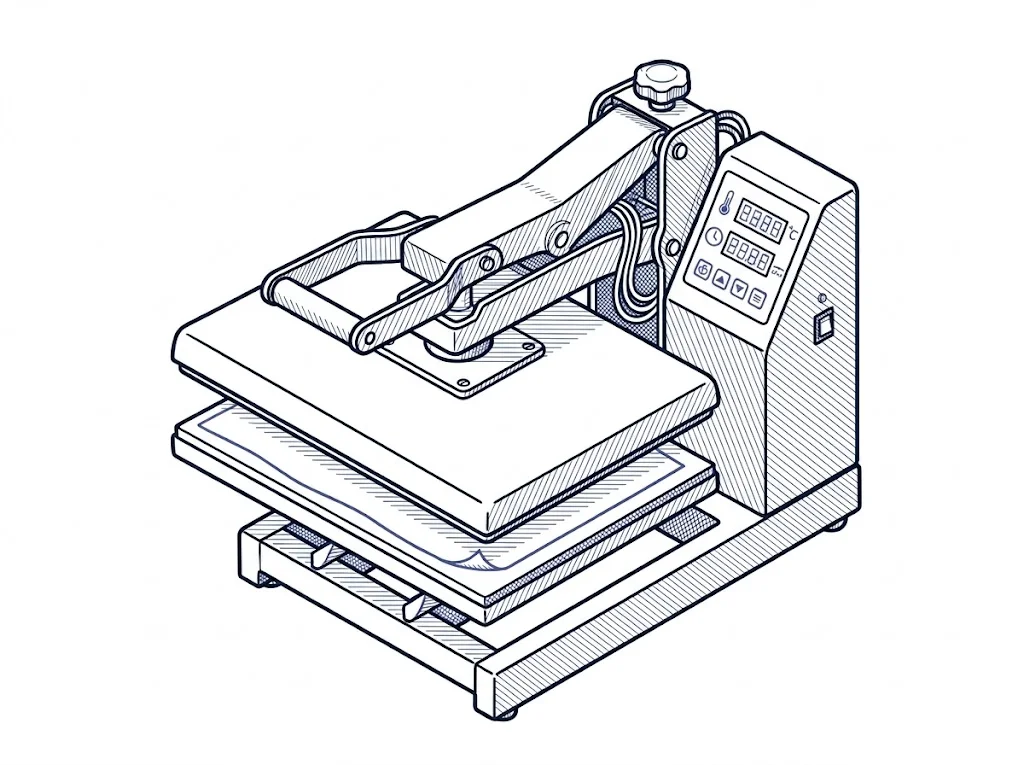
Sublimation printing exploits a fascinating chemical phenomenon: special dye-sublimation inks, under the heat of a press (typically 180–210 °C), pass directly from the solid to the gaseous state without going through liquid, penetrating and chemically bonding with the fibres of the substrate. The result is a colouration that is not deposited on the surface but is integrated into the material itself: prints are waterproof, abrasion-resistant, washable without fading and imperceptible to the touch.
The process requires two components: an inkjet printer loaded with sublimation inks (or a dedicated large-format printer) and a heat press. Compatible substrates are synthetic fabrics with a high polyester content (≥65%) and any surface coated with a dedicated polymer (mugs, plaques, cushions, smartphone cases, panels). The white of the fabric or coating is the white of the print: printing on dark backgrounds is not possible without pre-treatment. In the maker context, sublimation is the go-to route for customising gadgets, merchandise and technical sportswear in short runs.
Machines for this process
No sheets published here yet.
We're verifying the first machines for this process. In the meantime you can browse the whole catalog →