Electronics soldering
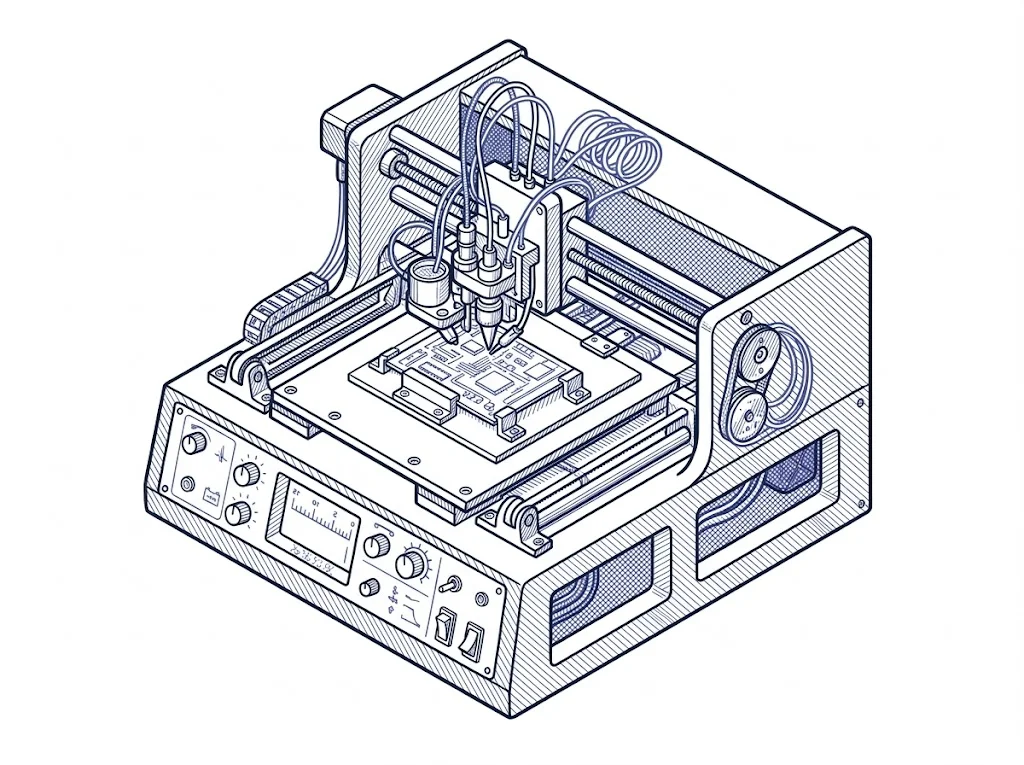
Electronics soldering is the joining process used in the production and testing of electronic circuits: low-melting-point metal alloys — tin-lead (Sn60Pb40) or lead-free alloys (Sn96.5Ag3Cu0.5, etc.) — are melted at typical temperatures between 180 and 260 °C and deposited on the joints between conductors and components, creating upon solidification an electrically conductive and mechanically sound connection.
Operating modes range from manual soldering with a tip iron (essential for prototyping, repair and through-hole assembly) to automated reflow — where the complete circuit, with solder paste previously screen-printed and SMD components placed, passes through an oven with a controlled thermal profile that simultaneously melts and solidifies all joints. Rework stations (hot air, BGA reballing) handle the removal and replacement of complex components. In the maker context, soldering is a fundamental skill for anyone working with Arduino, microcontrollers, RF modules and any project requiring the assembly of custom boards.
Machines for this process
No sheets published here yet.
We're verifying the first machines for this process. In the meantime you can browse the whole catalog →