Heat treatment
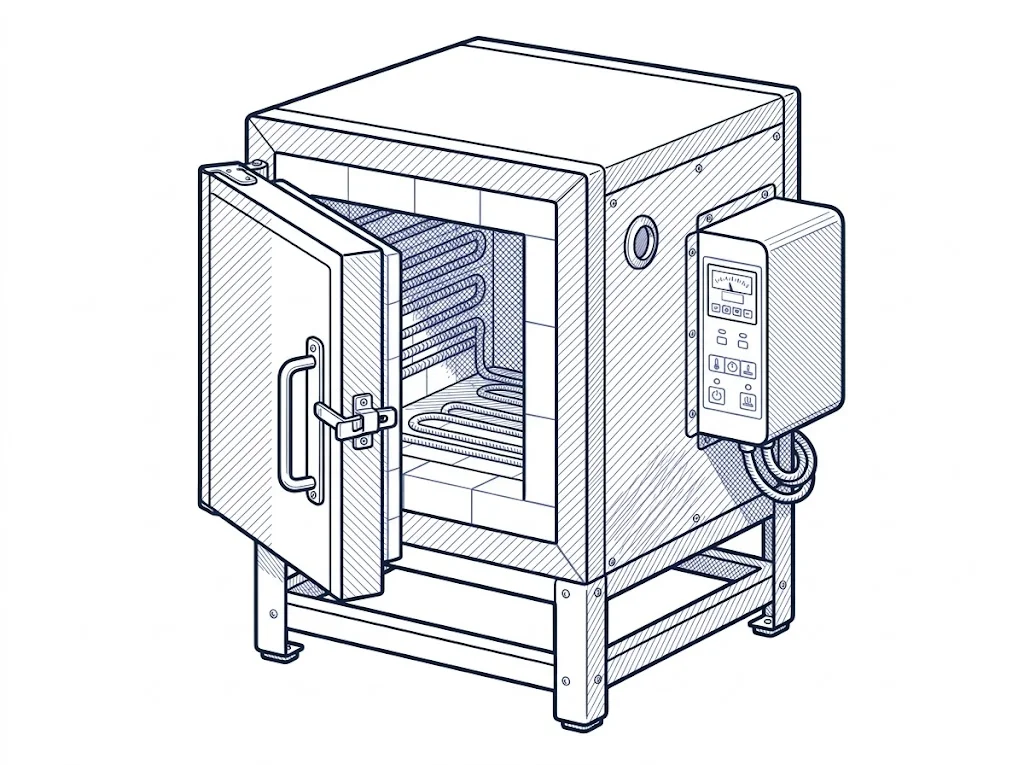
Thermal processes represent a cross-cutting and fundamental stage of manufacturing, in which the controlled application of extreme heat is exploited to alter the physical state, microstructure or mechanical-chemical properties of materials. At the basis of traditional plastic working we find blacksmith's forges, which bring metals to incandescent temperatures to make them malleable and ready for deformation and forging. Going beyond the softening point, the melting and crucible process makes it possible to completely liquefy alloys inside highly resistant refractory vessels, in order to then pour the matter into appropriate moulds and obtain raw components with complex geometries. Operating at different but equally critical thermal regimes, curing ovens play an essential role in the cross-linking of polymers, the curing of industrial powder coatings or the sintering of ceramics, guaranteeing the stability and hardening of the finished product. Finally, for the supreme optimization of engineering performance, metal heat treatment is used: through rigorously calibrated cycles of heating and cooling (such as quenching, tempering or annealing), industry is able to modify the internal crystalline structure of components, deliberately increasing their surface hardness, toughness or machinability. Together, these technologies shape the very essence of matter, ensuring that every part can withstand the most extreme stresses of its life cycle.
Machines for this process
No sheets published here yet.
We're verifying the first machines for this process. In the meantime you can browse the whole catalog →