Resin 3D printing
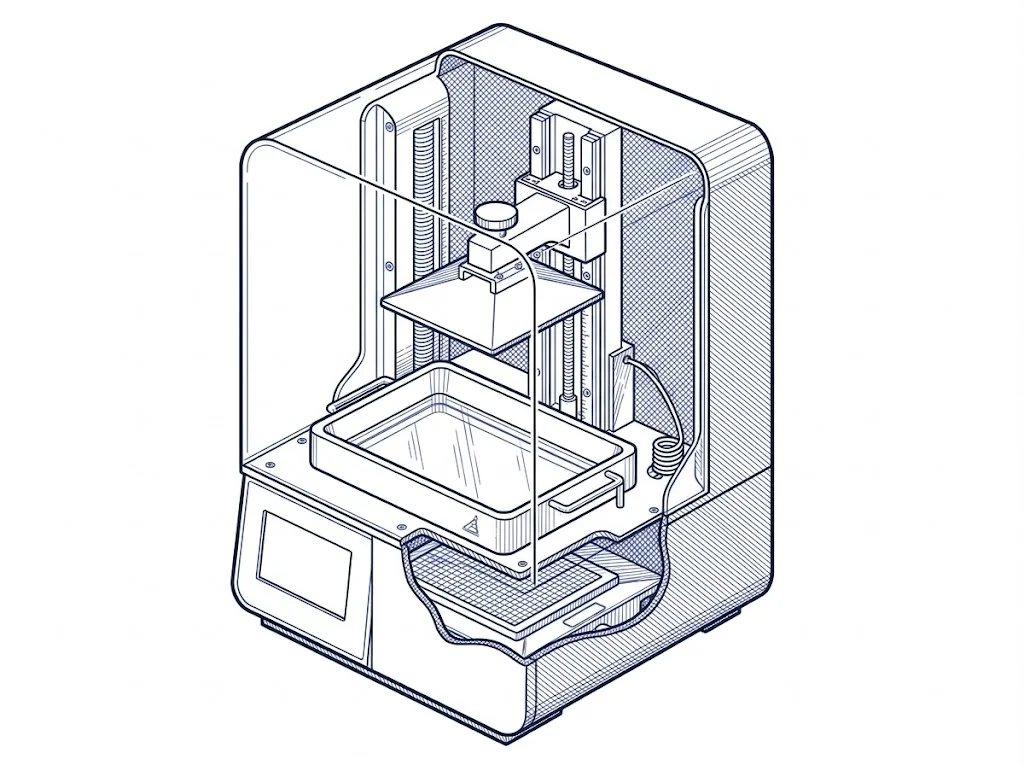
Resin 3D printing belongs to the photopolymerisation family: instead of extruding a solid filament, these machines use ultraviolet light to selectively solidify a photosensitive liquid resin, building the object layer by layer with dimensional accuracy and surface quality markedly superior to FDM. The three main technologies — SLA (point laser), DLP (digital projection via DMD chip) and MSLA (LCD mask) — share the same underlying principle but differ in light source, speed and cost, with MSLA now dominating the consumer segment thanks to its price-to-quality ratio.
The category's key strength is resolution: layer thicknesses typically between 25 and 100 µm and surfaces almost free of stairstepping make it the preferred choice for jewellery, scale modelling, aesthetic prototypes, and dental and medical applications. The range of available resins has expanded considerably in recent years, covering rigid, flexible, heat-resistant, castable and biocompatible formulations.
The main drawbacks concern mandatory post-processing — washing in solvent (IPA or dedicated solutions) and UV post-curing — as well as the handling of uncured resin waste, which requires attention in terms of safety and disposal. Build volumes generally remain more limited than FDM, especially in the desktop segment.
Machines for this process
No sheets published here yet.
We're verifying the first machines for this process. In the meantime you can browse the whole catalog →