Sewing machines
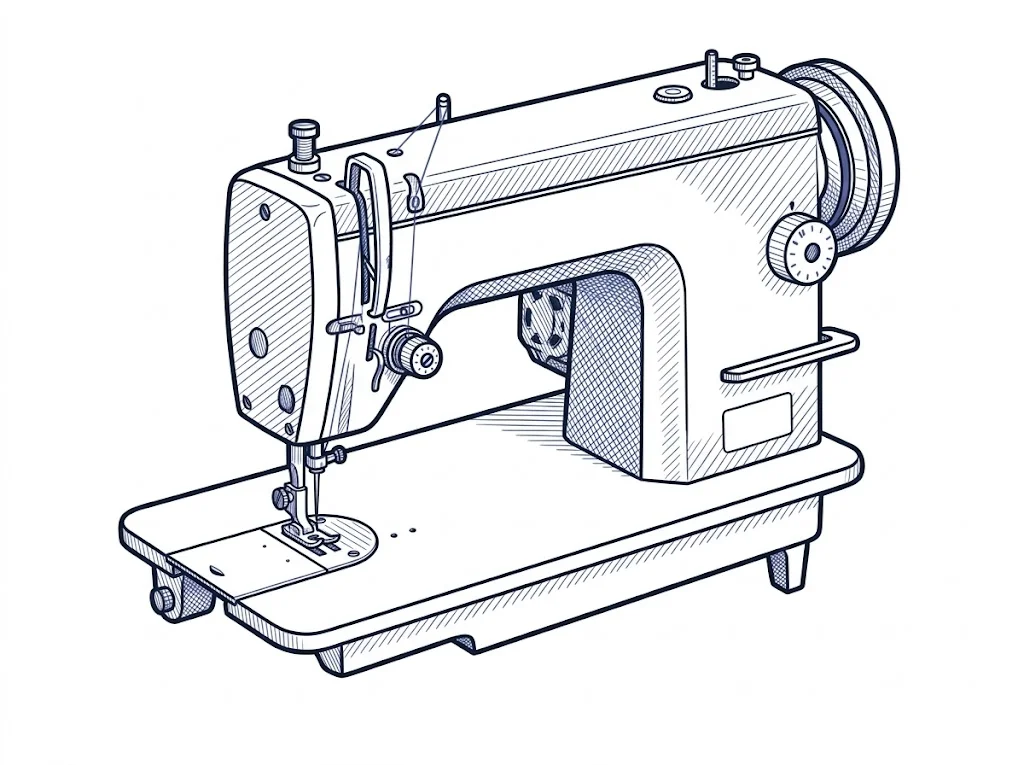
Sewing machines are textile machines that join layers of fabric, leather or other flexible materials through the lockstitch: an upper thread from the spool and a lower thread from the bobbin interlace inside the material, creating a stitch that resists tension and washing. The fundamental mechanism — needle, feed dog and hook — has remained unchanged since Singer's invention, but electronics and digitalisation have revolutionised functions and precision.
The main variants are distinguished by mechanism and application: mechanical sewing machines guarantee robustness and ease of maintenance; electronic machines manage stitch length, presser-foot pressure and speed with digital control and programmable stitch patterns; industrial sewing machines (flatbed, cylinder arm, post bed) are optimised for heavy materials and continuous high-speed cycles. In the maker and creative dressmaking context, the choice of machine determines the range of workable materials — from thin silk to thick leather — and the quality of the finished stitch.
Machines for this process
No sheets published here yet.
We're verifying the first machines for this process. In the meantime you can browse the whole catalog →