Mechanical engraving
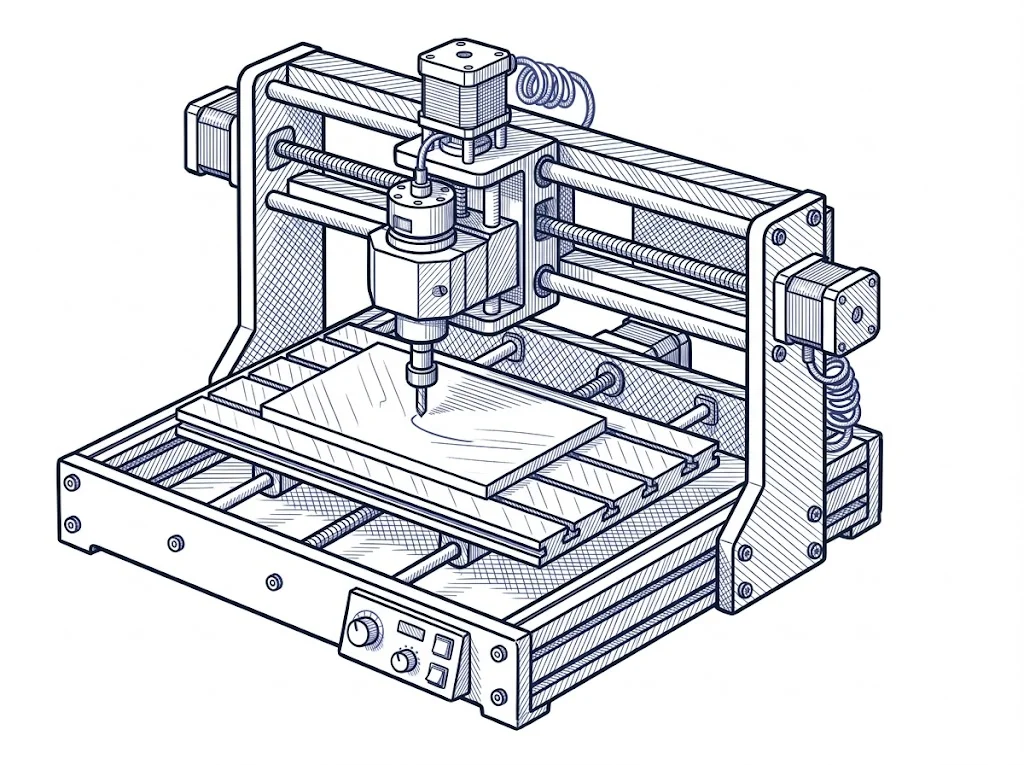
Mechanical engraving is the subtractive process that traces grooves, reliefs and permanent patterns on a material's surface through the direct contact of a mechanically guided cutting tool. Unlike laser engraving (photothermal) or chemical engraving (selective dissolution), the principle is purely physical: the stylus, burin or cutter removes material by plastic deformation and micro-cutting, leaving tactile and deep marks.
The main machines in this category are CNC pantographs — the digital heirs of mechanical copy pantographs — which guide small-diameter cutters along 2D or 2.5D paths to engrave nameplates, instrument panels, moulds and components in metal, plastic and wood. Multipurpose CNC routers (such as Shapeoko or Nomad) cover the same ground with greater geometric flexibility. For jewellery, cutlery and goldsmithing, precision bench pantographs and manual rotary tools (Dremel, Foredom) offer irreplaceable tactile control for finishing and personalising one-off pieces.
Machines for this process
No sheets published here yet.
We're verifying the first machines for this process. In the meantime you can browse the whole catalog →