Brazing
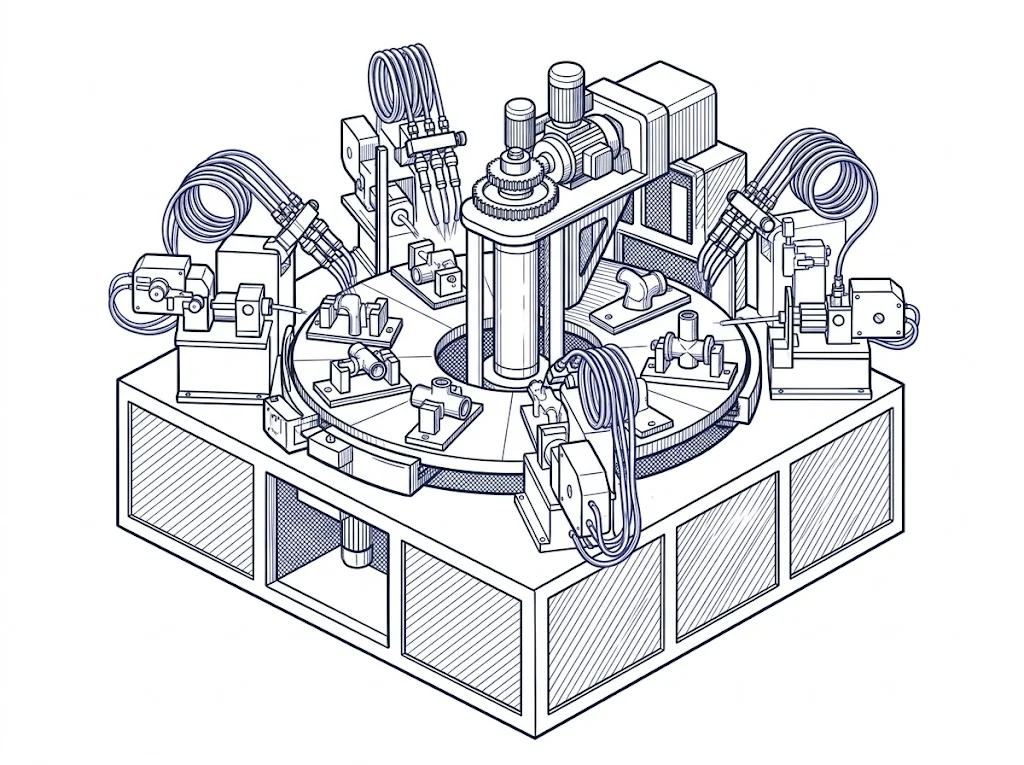
Brazing is a joining process in which a low-melting filler metal (above 450 °C, typically 600–900 °C) is brought to liquid state and distributed between the parts to be joined by capillary action, without melting the base material. Unlike fusion welding, the base material remains solid and its mechanical properties are not altered by a heat-affected zone; the joint is instead guaranteed by the metallurgical adhesion of the solidified filler alloy to the clean surfaces of both parts.
The most common filler materials are silver-copper-zinc alloys (BAg) for stainless steel and dissimilar metals, brass (BCuZn) for carbon steel and copper-phosphorus alloys (BCuP) for copper and brass without flux. Brazing is the method of choice for hydraulic fittings, refrigeration systems, technical jewellery, brass wind instruments and any application requiring leak-tight and mechanically robust joints without thermal distortion of the workpiece. In the maker context, propane/butane torches and compact oxy-acetylene sets make brazing accessible even outside the industrial workshop.
Machines for this process
No sheets published here yet.
We're verifying the first machines for this process. In the meantime you can browse the whole catalog →